There’s a specific kind of professional that every team quietly depends on: the person who keeps a project from turning into chaos. The one who knows the deadline, the budget, who’s blocked, and what needs to happen next — before anyone has to ask. That’s not a personality trait. It’s a skill set. And it’s one of the more teachable, transferable, and in-demand skill sets in business today.
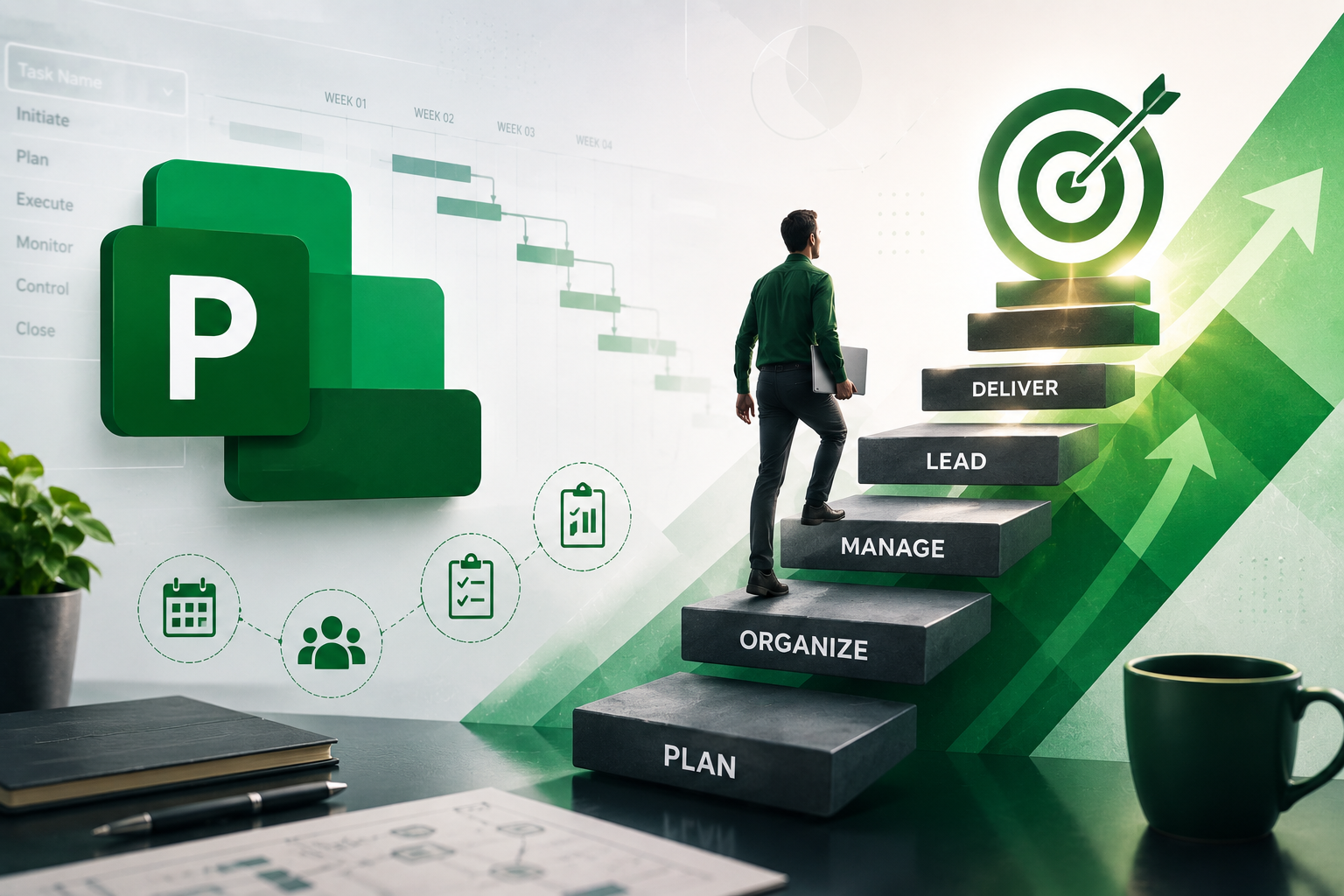
Microsoft’s Project Management Professional Certificate on Coursera is built to hand you exactly that skill set, structured around the same body of knowledge tested on the globally recognized PMP® certification exam. Here’s a grounded look at what’s inside, who it’s for, and whether it earns a spot on your learning list.

The Case for Project Management Right Now
Project management isn’t a niche corporate function anymore — it’s a discipline that spans construction, IT, healthcare, marketing, engineering, and product teams alike. The program itself points to projections showing the project-oriented labor force across major sectors growing by roughly a third by 2027, translating to nearly 22 million new roles. That’s not a hype number pulled from nowhere — it reflects a simple truth: as organizations take on more complex, cross-functional initiatives, someone has to own the plan and drive it to completion.
Microsoft built this certificate to train exactly that person, using its own real project methodology and industry credibility.
What’s Actually Inside the 9 Courses
This program is structured as a 9-course series, moving from foundational concepts through to formal PMP exam preparation:
- Project Management Fundamentals — core concepts, planning approaches, and the role of a PMO
- Team Building and Leadership in Project Management — team development stages and leadership styles
- Project Manager Engagement with Stakeholders — communication, culture, and organizational alignment
- Process Groups and Processes in Project Management — communication planning and proactive risk management
- PMP Formulas — Earned Value Management, ROI, and the math behind tracking project performance
- Project Management Principles — the 12 PMP principles from the PMBOK guide
- Project Management Performance Domains — the 8 performance domains applied across a project lifecycle
- Agile and Hybrid Approaches in a Project Environment — Agile, Kanban, and hybrid methodologies
- PMP Application Process and Practice Exam — exam structure, content outline, and test-taking strategy
That progression matters. You’re not just memorizing vocabulary — you’re moving from “what is a project” to “here’s how I’d actually run one,” and finishing with dedicated, exam-specific preparation.
Built Around Real Scenarios, Not Just Lecture Slides
Each course includes a project-based capstone simulating a real project management scenario, and the program closes with a final capstone where you work through a fictional business problem from the perspective of a working project manager — using Microsoft Excel as your actual project-tracking tool from concept through closeout. That’s a meaningful detail if your goal is walking into interviews with something concrete to talk about, rather than just a list of terms you can define.
The final course also includes a full mock exam styled after the real PMI®-authorized PMP® exam, so you’re not caught off guard by format or pacing when exam day arrives.
The PMP Angle — What to Know
This certificate is explicitly designed to prepare you for the Project Management Professional (PMP) exam, administered by PMI — one of the most respected credentials in the field, independent of any single employer or platform. Worth noting: PMI has its own eligibility requirements for actually sitting the exam (typically around experience or education), and the exam fee itself is separate from the Coursera program cost. This certificate builds your knowledge base and study plan — you’ll register for the exam directly with PMI as a separate step.
If you’re currently working toward, or have already completed, Microsoft’s related Program Management Professional Certificate, it’s worth knowing that five of the nine courses here overlap directly with that program — so your prior progress carries over instead of making you repeat material.
Who This Is Actually For
This is a beginner-friendly program with no prerequisites, but it tends to be the strongest fit if:
- You’re pivoting into project management from an adjacent role (operations, coordination, admin, ops support)
- You’re already managing projects informally and want the vocabulary, frameworks, and formulas to back it up
- You want a structured, affordable on-ramp to the PMP exam rather than piecing together study materials yourself
- You’re eyeing roles like Project Manager, Program Manager, Product Manager, Change Manager, Operations Manager, or an IT/construction/engineering project manager
Time, Format, and Credit
Coursera lists this as roughly 4 months at 10 hours a week, fully self-paced, with a shareable certificate you can add to LinkedIn. It’s also eligible for 7 ECTS credits through Coursera’s credit recommendation pathway — useful if you’re considering further formal education down the line, though acceptance is always at the discretion of the individual institution.
The Honest Take
If you want one structured path that takes you from “no formal project management background” to “PMP-exam-ready, with real applied project work to show for it,” this program is built with exactly that outcome in mind. It’s taught by Microsoft, mapped closely to PMI’s own framework, and doesn’t just teach theory — it has you actually run a project from start to finish using tools you’ll use in a real job.
It’s not a weekend skim — plan on a genuine few months of consistent effort. But if you’re serious about project management as a career move, this is a well-built, credible way to get there.
👉 Explore the Microsoft Project Management Professional Certificate on Coursera
This post contains an affiliate/referral link. If you enroll through it, it may support the creator of this content at no extra cost to you.